Showing posts with label Accountability and Transparency. Show all posts

Monday, May 20, 2013

DANGLING THE CARROT: THE EMERGENCE OF MORE FRAGILE STATES IN WEST AFRICA

Just this morning, hundreds of people have started fleeing the northern Nigeria state of Borno to neighbouring Niger, Chad and Mali. Apparently, the government of Nigeria just announced a state of emergencyin 3 states - Yobe, Adamawa and Borno, where the popular terrorist group – Boko Haram resides. Niger, Chad and Mali seem to be a big suspect. How? – Niger has a awful 81.8% of her population in severe poverty; Northern Mali is still struggling with war, and also has 68.4% of her population in poverty; the story of the later – Chad has been disturbing in recent times, with the shrinking of her only resource – the lake, perhaps due to climate change.

These are all fragile states, which are also a reflective of low income countries. The average gross national income per capital of the 16 West African states is at $908.75. That’s quite disturbing! The highest in this region is Cape Verde with about $3,540. Singapore and Malaysia both have $42,930 and $8,770 respectively. ( Scroll over map below to view indicators of fragility in West African countries) 
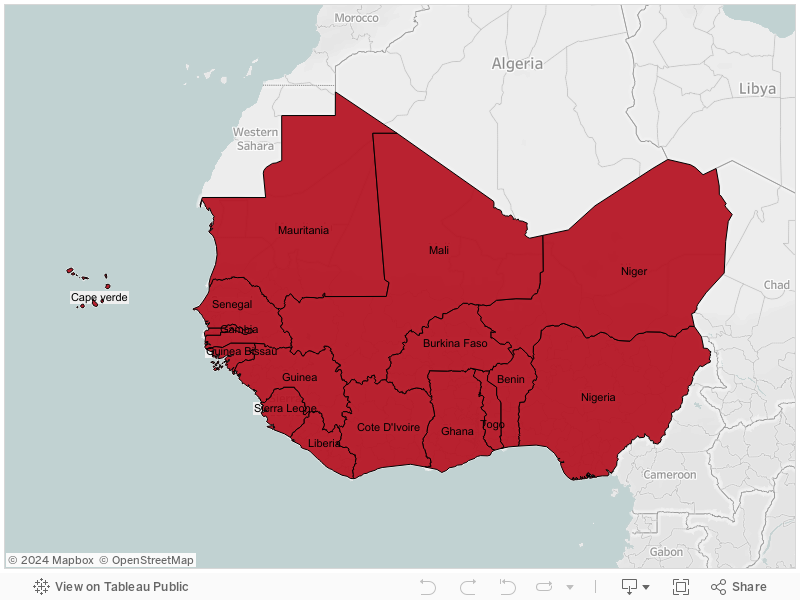


Nigeria, where 52% of the about 312 million people living in West Africa reside was ranked 14 out of 117 countries on the 2012Fund for Peace failed states index. Her demise remains peculiar owing to its size and population. While her GDP has become one of the fastest growing in the Sub Saharan, it is been threatened by insecurity. The Boko Haram sect based in northern Nigeria has killed about 1,854 people in 2 years

More than ever, the time bomb seems dangling on the giant that looks over the West African state. The challenges of insecurity, lack of social services, job creation and accountability in government cannot be over emphasized. In Nigeria and other West African countries, about 48.3% still live in poverty. Paul Collier, a professor of economics at Oxford University referred to them as the “Bottom Billion” in 2008 and proffered some solutions. It’s quite unfortunate that the same challenges still exist, with the same set of people at the leadership.
(View Paul Collier TEDx Talk below) 


One may have taught, as the post – 2015 deliberations set in, wouldn't it be pertinent to add good governance to one of the sustainable development goals? If government cannot provide basic services (roads, good education, health centres  to her citizens, fragile states resorts, thus demining the prospect for development. However, the way out of these environments is a very limited, much focused package because the capacity for change in these societies is very limited.

Often the government is not able to do very much, and people have no self belief in their society. Where will the solutions come from? It should come from the indigenes, perhaps with little support from external stakeholders.

Monday, April 22, 2013

MONITORING AND EVALUATION SYSTEMS: CAN THEY PROMOTE TRANSPARENCY AND ACCOUNTABILITY IN WEST AFRICA?


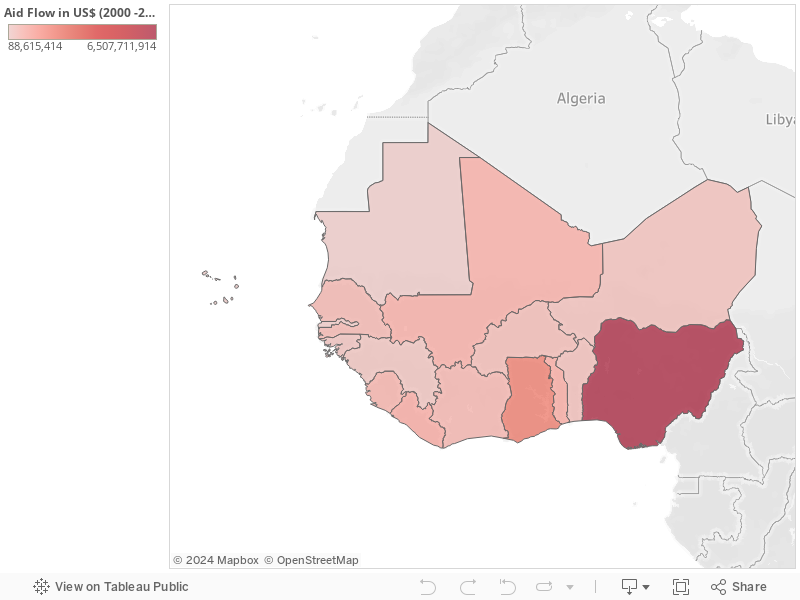
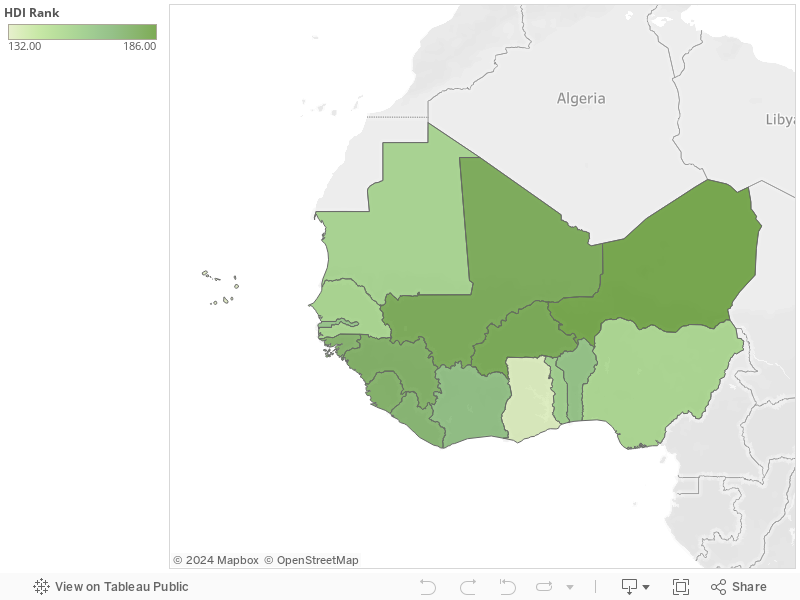
Development programs are expected to deliver results for everyone involved in development. The value of their ideas, advice and action produced is increasingly being gauged by whether it improves lives and for us to affirm, it should be in the public domain. In the 16 countries in West Africa alone, $15 trillion has been spent on aid between 2010 – 2012 with Nigeria and Ghana receiving the most with 42% and 14% respectively (View the dataset Here). Lots of funds you will say – but does this amount to development? Out rightly, only two (Cape Verde and Ghana) out of these 16 countries falls within the Medium Human Development Rank of the Human Development Index 2013, the others keep crawling within the Low Human Development Rank since 2009 that the Index has been published.


Consequently, every program needs the information to answer three vital questions: “what could constitute success in addressing problems?”; “How will we know success when we achieve it”? And can achievements and its processes be shared in the public domain”? Monitoring and Evaluation (M&E) systems can help everyone understand which programs are working, which are not, which can be scaled up, and which could be abandoned, but how it answers the questions in these West African countries remain farfetched!

Recently, during one of the M&E courses I facilitated with Cloneshouse Nigeria, where 80% participants were from government institutions, I asked “will your government be able to publish findings in public domain, or perhaps the breakdown of total spending of your government”? Most of them responded with enthusiasm that they are willing and ready, but their greatest fear might be hindrances coming from the political party, on whose platform they were elected.
Problems of the Country highlighted in Red and Solutions in Green. How True?


Nevertheless, M&E systems can promote transparency and accountability within governments in West Africa. Beneficial spillover effects may also occur from shining a light on results. For aid organizations, how much pressure is put on receiving governments is what we don’t know. One of the participants asked “why do we always receive world bank grants for creation of more health centers, while the once available aren't serving to optimal level, we already have enough health centers to cater for the population of the state”


No doubt, external and internal stakeholders should have a clear sense of status of projects, programs and policies. But, is the ability to demonstrate positive results able to increase popular and political support in West Africa? The truth is that most citizens do not have public confidence in the leadership of their various states. Even, if they publish positive results, citizens believe the outcomes are been doctored to portray “a breath of fresh air” which evaporates at dawn.

Certainly, there are organizational and political costs, and risk associated with implementing result – based M&E systems. There are also crucial costs and risks in not implementing such systems. Suffice it to say that, M&E systems are not new to governments in West Africa, with every department and project having its own M&E unit – how effective are the unit in this region? Permit me to say “I only see their trucks and vehicles, much more than I see their findings in the public domain.

Tuesday, March 5, 2013

SOCIAL MEDIA AND CREATIVE TECHNOLOGIES: A RECIPE TO #SAVEBAGEGA

In october 2012, when the Follow The Money Team were developing their website, little did they know that the hashtag #SaveBagega was going to reach a staggering 600,000 people from over 100 countries. Consequently, putting more pressure on the government of Nigeria to attend to the urgent need of this ailing community.
Screenshot (Jan 26, 2013) of a hashtracking report on the
 hashtag #SaveBagega

Bagega is a village community in Zamfara, Northern Nigeria, where 1,500 children awaits urgent medical attention for lead poisoning. "All we had in mind was to create a web platform integrated with social media tools, and write reports (Twitter, Facebook, YouTube and Storify) that could amplify the voice of these helpless communities" said Hamzat Lawal, co - creator of the non-profit group that advocates, tracks, and visualizes aid meant for local communities.

Taking a time travel to a decade ago, the story of Bagega wouldn't have reached the next town to Zamfara. Perhaps, if the same medium was used in 2010, when about 400 children died of thesame lead poisoning, an epidemic that was 'termed the largest in the world" there would not have been much death as reported.

Everyday millions of hash tags are been created on Twitter for different reasons. "We were looking for a hash tag that could easily be related with the ailing community, and since this advocacy was directed to saving these children in Bagega, we decided to create #SaveBagega" affirmed Hamzat
Screenshot (October, 2012) of the Follow the Money Website


Coordinating Tweets could be challenging atimes, as such tweets were directed towards stakeholders that were concerned, no thanks some were already using twitter! the list included president Goodluck Jonathan @goodluckjtweets, he's social media PR wasn't spared - Reno Omokri @renoomokri; also the Senator who sees to matters of ecology and environment - @bukolasaraki Tweets were also directed to organizations that might be interested in children, communities, data, accountability and transparency.

Moreover, On December 6, 2012, a social media campaign was also launched with Human Rights Watch urging people to help write on the official facebook wall of President Goodluck Jonathan "President Jonathan, why won't you release the money you promised in May to clean up poisonous lead in Zamfara? Children are dying and your government's failure to act is putting more children at risk".

What happened afterwards? By the end of January, when Senator Bukola Saraki visited Bagega, he confirmed to the whole world, not through the terrestrial media, but through his twitter handle @bukolasaraki that "from confirmed sources the president has ordered the release of funds for the remediation of Bagega. Perhaps, a win for the use of "co-ordinated" creative technologies. Having said that, what would have happened in cases where the government has no presence on internet or the social media?
Recently, I was talking with some colleagues on how the internet not only make information open, but how it has become "a house of history" in 30 years from now, the children of Bagega will be opportune to read what struck their community, some years back, and what their leaders did to save them!

As the quest to ensure transparency and accountability in the funds released to Save Bagega continues, at the last stakeholders meeting on February 12, 2013 in Gusau, the Follow the Money Team asked the Ministry of Mines and State Development (MMSD) on going on how much was made available to them.
."We will get back to you before the next meeting and try to make it public" says the representative of MMSD. All these were posted on their tweet handles for the world to see. On February 26, 2013, the MMSD announced in a press release that 158.3 million was received by their parastatal to encourage safer mining in Zamfara.

As Follow the Money might not be the only available or possible model for advocating for open data and transparency, or tracking and visualizing aid meant for local communities, it can be said that they have been able to document history, and open a new page in how creative technologies can be a tool for saving communities - Maybe in this part of the world!


Tuesday, December 25, 2012

WOULD YOU SPARE A CLICK TO SAVE 1,500 CHILDREN?


What would one give in exchange for a new iPad? One 17yr-old boy gave a kidney! Apparently, he couldn’t afford an iPad and wanted one so badly that he was willing to risk surgery. Now you have a chance to sign a petition to save the lives of 1,500 lead poisoned children here
Primary school children in Bagega

Bagega, a small community with a population of about 10,000 people in Northern Nigeria has about 1,500 lead poisoned children awaiting urgent medical attention.

In the heat of November, while I was in Bagega, I strolled into the only clinic, which had three blocks of dilapidated wards, with rickety patient beds (three in each block). Entering the first block, meant to be a delivery ward, was sitting a woman carrying a new born baby. One of the staff told me the woman just got delivered of a baby boy. “The only thing we are not certain about is the lead blood level of this newly born in the next coming months”.
The extension of the clinic at Bagega

While the numbers of children keep adding up in this community, the only hope for them is you and I, that will be responsible for getting the voices of these innocent children heard, not only by the federal government of Nigeria, but the world at large. “Children keep dying of high lead blood levels in our community, but seem underreported” affirmed Sanni M. Aliu Bagega, a 31yr-old Environmental Health Officer from Bagega.

While the government of Nigeria, during an International Conference on Lead Poisoning on May 9 and 10, 2012 , already promised $4million (NGN850million) for the clean-up of this community. About 7months now “there hasn’t been any help until now, people come to talk to us, but they won’t do anything” said Halima, a grandmother that has lost eight grandchildren to lead poisoning already.
The contaminated Inna Gwabi Dam in Bagega where
community members fetch water, wash and have their bath

Remediation can’t wait to save the lives of these children. Apparently, we can’t afford to head to the streets, but our appeal can be forwarded through a click. Please sign the petition here on behalf of the children of Bagega. About 512 great people from 59 countries already signed, and this has made local and international media, the social media including bloggers amplify the voice of this ailing community.

On December 6, 2012 as a follow up, the Human Rights Watch launched a social media campaign seeking the president’s release of promised cleanup funds. To join the campaign asking President Jonathan to release the funds, you can visit his facebook page and comment on his last status update with the following message:

'President Jonathan, why won’t you release the money you promised in May to clean up poisonous lead in Zamfara? Children are dying and your government’s failure to act is putting more children at risk'