Showing posts with label West Africa. Show all posts

Monday, May 20, 2013

DANGLING THE CARROT: THE EMERGENCE OF MORE FRAGILE STATES IN WEST AFRICA

Just this morning, hundreds of people have started fleeing the northern Nigeria state of Borno to neighbouring Niger, Chad and Mali. Apparently, the government of Nigeria just announced a state of emergencyin 3 states - Yobe, Adamawa and Borno, where the popular terrorist group – Boko Haram resides. Niger, Chad and Mali seem to be a big suspect. How? – Niger has a awful 81.8% of her population in severe poverty; Northern Mali is still struggling with war, and also has 68.4% of her population in poverty; the story of the later – Chad has been disturbing in recent times, with the shrinking of her only resource – the lake, perhaps due to climate change.

These are all fragile states, which are also a reflective of low income countries. The average gross national income per capital of the 16 West African states is at $908.75. That’s quite disturbing! The highest in this region is Cape Verde with about $3,540. Singapore and Malaysia both have $42,930 and $8,770 respectively. ( Scroll over map below to view indicators of fragility in West African countries) 
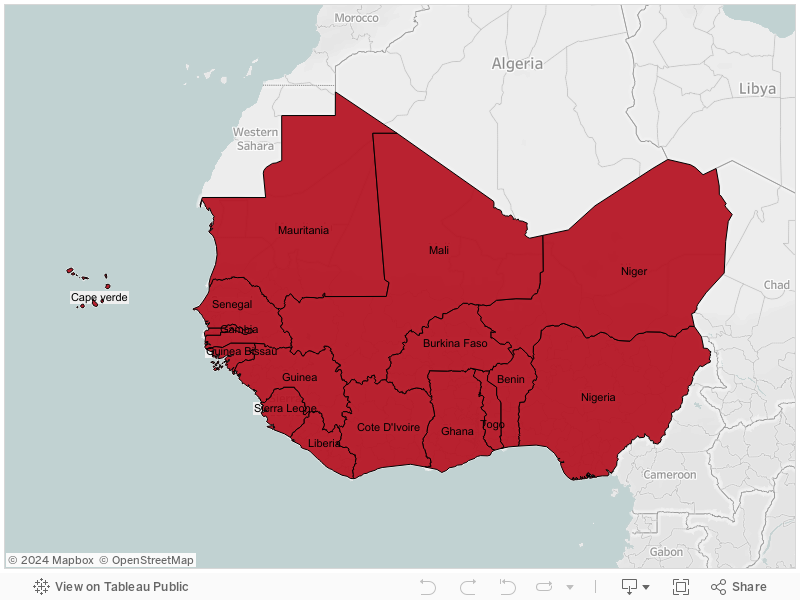


Nigeria, where 52% of the about 312 million people living in West Africa reside was ranked 14 out of 117 countries on the 2012Fund for Peace failed states index. Her demise remains peculiar owing to its size and population. While her GDP has become one of the fastest growing in the Sub Saharan, it is been threatened by insecurity. The Boko Haram sect based in northern Nigeria has killed about 1,854 people in 2 years

More than ever, the time bomb seems dangling on the giant that looks over the West African state. The challenges of insecurity, lack of social services, job creation and accountability in government cannot be over emphasized. In Nigeria and other West African countries, about 48.3% still live in poverty. Paul Collier, a professor of economics at Oxford University referred to them as the “Bottom Billion” in 2008 and proffered some solutions. It’s quite unfortunate that the same challenges still exist, with the same set of people at the leadership.
(View Paul Collier TEDx Talk below) 


One may have taught, as the post – 2015 deliberations set in, wouldn't it be pertinent to add good governance to one of the sustainable development goals? If government cannot provide basic services (roads, good education, health centres  to her citizens, fragile states resorts, thus demining the prospect for development. However, the way out of these environments is a very limited, much focused package because the capacity for change in these societies is very limited.

Often the government is not able to do very much, and people have no self belief in their society. Where will the solutions come from? It should come from the indigenes, perhaps with little support from external stakeholders.

Monday, April 22, 2013

MONITORING AND EVALUATION SYSTEMS: CAN THEY PROMOTE TRANSPARENCY AND ACCOUNTABILITY IN WEST AFRICA?


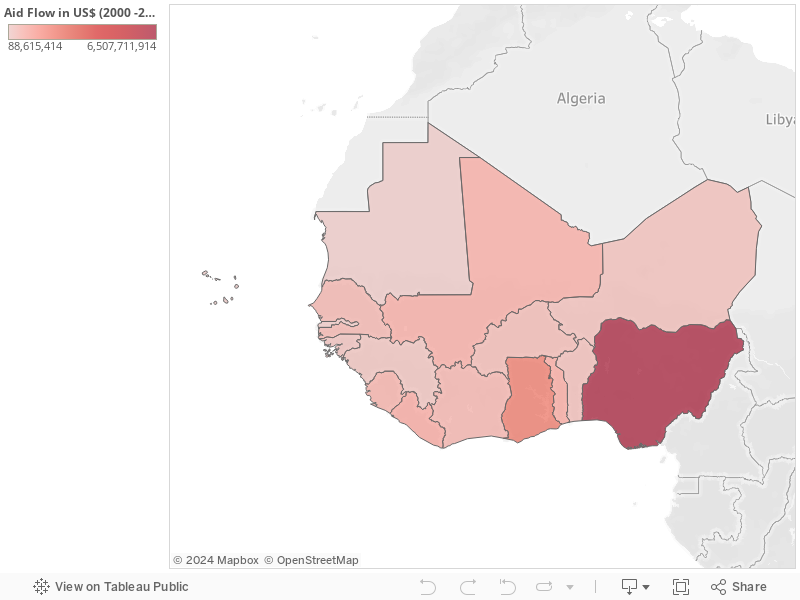
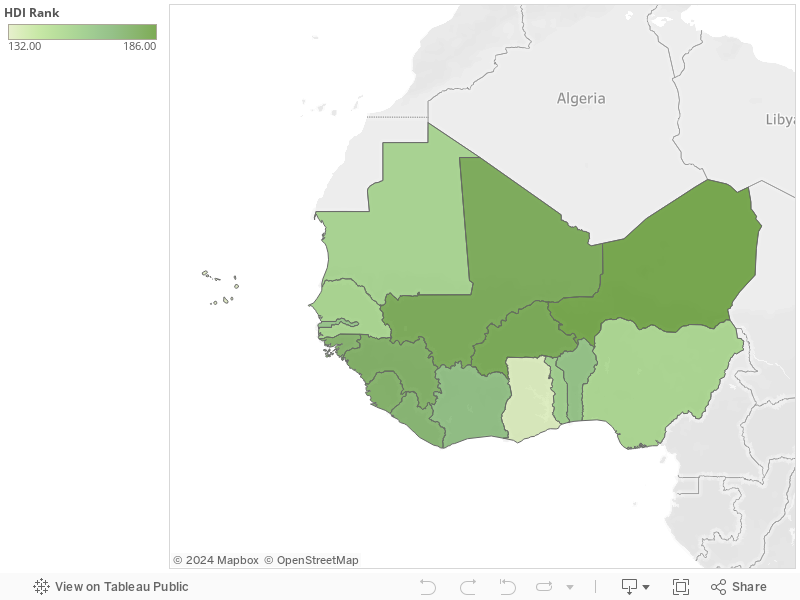
Development programs are expected to deliver results for everyone involved in development. The value of their ideas, advice and action produced is increasingly being gauged by whether it improves lives and for us to affirm, it should be in the public domain. In the 16 countries in West Africa alone, $15 trillion has been spent on aid between 2010 – 2012 with Nigeria and Ghana receiving the most with 42% and 14% respectively (View the dataset Here). Lots of funds you will say – but does this amount to development? Out rightly, only two (Cape Verde and Ghana) out of these 16 countries falls within the Medium Human Development Rank of the Human Development Index 2013, the others keep crawling within the Low Human Development Rank since 2009 that the Index has been published.


Consequently, every program needs the information to answer three vital questions: “what could constitute success in addressing problems?”; “How will we know success when we achieve it”? And can achievements and its processes be shared in the public domain”? Monitoring and Evaluation (M&E) systems can help everyone understand which programs are working, which are not, which can be scaled up, and which could be abandoned, but how it answers the questions in these West African countries remain farfetched!

Recently, during one of the M&E courses I facilitated with Cloneshouse Nigeria, where 80% participants were from government institutions, I asked “will your government be able to publish findings in public domain, or perhaps the breakdown of total spending of your government”? Most of them responded with enthusiasm that they are willing and ready, but their greatest fear might be hindrances coming from the political party, on whose platform they were elected.
Problems of the Country highlighted in Red and Solutions in Green. How True?


Nevertheless, M&E systems can promote transparency and accountability within governments in West Africa. Beneficial spillover effects may also occur from shining a light on results. For aid organizations, how much pressure is put on receiving governments is what we don’t know. One of the participants asked “why do we always receive world bank grants for creation of more health centers, while the once available aren't serving to optimal level, we already have enough health centers to cater for the population of the state”


No doubt, external and internal stakeholders should have a clear sense of status of projects, programs and policies. But, is the ability to demonstrate positive results able to increase popular and political support in West Africa? The truth is that most citizens do not have public confidence in the leadership of their various states. Even, if they publish positive results, citizens believe the outcomes are been doctored to portray “a breath of fresh air” which evaporates at dawn.

Certainly, there are organizational and political costs, and risk associated with implementing result – based M&E systems. There are also crucial costs and risks in not implementing such systems. Suffice it to say that, M&E systems are not new to governments in West Africa, with every department and project having its own M&E unit – how effective are the unit in this region? Permit me to say “I only see their trucks and vehicles, much more than I see their findings in the public domain.