Showing posts with label Open development. Show all posts
Showing posts with label Open development. Show all posts
Friday, October 24, 2014

Thursday, March 27, 2014
THE OPEN DATA DAY IN ABUJA: LIBERATING SERVICE DELIVERY IN THE EDUCATION SECTOR IN NIGERIA
As building capacity of government officials, CSOs and
journalist remains important in the data liberation evangelism, the Follow The Money team focused more on their data
expedition class on Open Data Day held at CODE with 28 participants. They
include government officials from Nigeria Extractive Industries Transparency Initiative
[NEITI], National Space Research and Development Agency [NASRDA], and the FCT Mass
Education Board, participants from the private sector, the media and CSOs. With
Oludotun Babayemi, a data enthusiast taking the participant through basics of
data design, data cleaning and publishing data, participants were thrilled having
insights on how to use data to tell stories “I have been bundle with so much
information today, and I appreciate this session, I now know where to get data
from and how to use spreadsheet for collaboration” explained an excited
Chinyere Opia from HOT FM
Demonstrating
the practical session at the Education Hackathon was quite strategic to use in
complimenting the practical sessions that went into training participants on
sorting, filtering and cleaning data. The Hackathon allowed participants to
filter and sort Nigeria data on Education within datasets downloaded from the
World Bank project sites, and also update mapping of funds from the budget
office on capital expenditures meant for federal education institutions in
Nigeria. [LOOK] how one of the participant
described #ODDAbuja
In
Nigeria, billions of Naira has been spent [through government spending and
international aid] on infrastructures on education that, often wouldn't reach
the community [Please read achieving the MDG goals in Nigeria] that it was
meant for. "Infact we have many challenges, One I will like to say is
government providing books and infrastructures that will make the children to
learn, and also levies on children which at times they might not be able to
afford" says Blessing Hassana [Watch the video], Principal of a secondary school in Nasarawa state
[that's a state just 20km away from the capital city, Abuja], what will happen
in other states? Perhaps, this says much about why there are still about 10
million out of school children in Nigeria.
With
the Education Budget Tracker still being curated for
government spending and international aid, the strategy is to focus on how many
education projects are operational in these communities. This Education Budget
Tracker which allows for education point mapping has huge potential as an
effective monitoring and management tool for planning and decision making. It
can really help government and funding agencies to know where to focus more on.
Some places might need infrastructure, while some its maintenance and others
might be training.
In
this way, the Ministry of Education and other donor agencies will be able to
monitor the impact of its large investments in the education sector. It will
also allow transparent tariff settings that reward good performance and
highlight inefficiencies. Moreover, it is interesting to know that this tool
allows trusted local people to provide information about the education service
delivery in their communities using their mobile phones. “Going forward for us,
the Follow the Money team is seeking partnership with interested entities to
pilot the usage of this tool in one of the states with poor education
performance index in northern Nigeria” says Hamzat Lawal while demonstrating
how we intend to use the tool to participants.
The
Open Data Day evening session started with a brief introduction of the Digital Humanitarian Network and how its members have
been using technologies before, during and after emergencies. How CODE intends to engage organizations and
communities interested in emergency response across the West African region
using technology was highlighted and some government participants were quite
interested and keen in how CODE will integrate crisis mapping into their
situation awareness room. “It is quite interesting to know that CODE is leading
innovative ideas in the region to help in early warning and emergency response,
it will be great to showcase this to the National Emergency Management Agency
[NEMA]” advised Godstime James of the National Agency for Space Research and
Development.
Monday, December 2, 2013
THE FUTURE OF DISASTER RISK RESPONSE IN THE WAKE OF THE DIGITAL HUMANITARIAN SPACE
Today, not only can you donate cash to support those
affected by disasters, you can also donate a few minutes of your time to
support the relief efforts on the ground thanks to new humanitarian
technologies and platforms orchestrated by a network which brings together
a diverse set of individuals from the humanitarian, development, human rights,
policy, technology, and academic communities.
This network
catalyzes communication and collaboration between a wide range of different
communities with the purpose of advancing the study and application of crisis
mapping worldwide. Popularly known as the International Conference of Crisis
Mappers [ICCM], it once again brought hundreds of humanitarians together at the
United Nations Office in Nairobi [UNON]
on November 18 – 22, 2013 discussing and plotting ideas for the future of
humanitarian response in a conference tagged “Humanitarian Technologies – In
and Out of Africa”.
The Crisis Mappers network was launched in
October 2009 at the first International Conference on
Crisis Mapping (ICCM 2009) in Cleveland, Ohio. These annual conferences
facilitate collective
engagement and dialogue that helps construct the boundaries of this emergent
new discipline.
At the conference, participants also brainstorm how to solve real problems and
initiate projects that help advance this new field.
Throughout
the year, the network facilitates continuing virtual interaction among its
members.Participants
engage through webcasts, create and browse profiles, email their needs through the
dedicated mailing list, write blogs, and share other announcements with the
group. “We in the CrisisMappers community have the luxury of having learned a lot
about digital humanitarian response since the Haiti Earthquake; we have learned
important lessons about data privacy and protection, codes of conduct, the
critical information needs of humanitarian organizations and disaster-affected
populations, standardizing operating procedures, and so on” said Patrick Meier,
the co-founder of the Network, in his keynote
welcome address.
This year, the ICCM started with a preconference site visit
to SiSi ni Amani and Spatial Collective, which allowed
participants to observe first-hand how GIS, mobile technology and
communication projects operate in informal settlements, covering a wide range
of topics that include governance, civic education and peace building. As
learning as become part of the ICCM, the second day was observed at the iHub, where different kinds of training were
observed throughout the day. Facilitators from ESRI,
Open Street Maps, MapBox, CaerusGeo, Ushahidi took participants through creating
maps using the different platforms, and likewise lessons learnt from various
initiatives that have been used on the platform. The short messaging service
[SMS] and mobile security training stream was anchored by Frontline SMS and
Tactical Technology Collective, showing how humanitarians have been deploying
the platform to create social change and the security implications. The team
from Open Knowledge Foundation [OKF] was able to
curate their school of data training with some participants, while the
knowledge stream was lead by Internews.
 |
| Angela Oduor leading the Mapping Stream session at the iHub |
On November 20, 2013 the main conference started at the
UNON, Gigiri with the traditional ICCM
Ignite talks showcasing great digital humanitarian works, forward –
thinking concept and ideas, with recent research and findings within the network.
This was followed by a panel that led the discussion mixed with a reflection on
the Westgate Mall attack in September in Nairobi. Philip Ogola of the Red Cross
in Kenya confirmed that the social media played a big role in getting situation
awareness during crisis; Angela Oduor of Ushahidi, a non government technology
outfit in Kenya showcased how the ushahidi platform was used in reaching out to
a number of families during the siege. As technology is becoming the future to
response, IBM’s Charity Wayua discussed how technology will continue to be
deployed in response to siege such as that of the Westgate. At the end of the
discussion, it was noted that technology played a big role in creating
situation awareness during the Westgate attack, nevertheless co-ordination
using this technology still remains a challenge, which in the near future will
be tackled.
 |
| ICCM 2013 participants at the UNON conference room |
As part of the day’s event, the tech
fair became a side attraction at the conference room lounge. The fair
brought together technology tools and events that have or will shape
humanitarian response. Presentations at the fair included the Artificial
Intelligence for Disaster Response by the Qatar Computing Research Institute;
NGO Aid Map by Interaction; location-based web and mobile software by Azavea;
The Walk to Mali project by Earth Hour Nigeria; Mobile data collection in
Somalia by mFieldwork; Security issues for everyday digital by Tactical
Technology Collective and ESRI showcasing its various GIS platforms. The day
went into a closing session with UNOCHA’s Information Management officer –
Andrej Verity giving the keynote of the conference, live via Skype from the
Philippines. He highlighted the importance of the work of digital humanitarians
in helping first responders on the ground, especially since the beginning of
the devastating 300km/hr typhoon Yolanda that struck the Philippines. “We have
witnessed a paradigm in the way humanitarians all around the world now respond
to crisis and disasters since 2009 till this present moment, just this morning,
the head of OCHA –Valerie Amos, has been presented verified situation updates
of the Philippines, this data, gathered by the various digital humanitarians
over the past few weeks will help hasten how our responders on the ground
respond to needs of the people in the Philippines” said Andrej
The following day witnessed roundtable sessions about Big
data with Anahi Ayala of Internews reiterating that Big data or data becomes
useless if the people cannot make use of it, Emmanuel Letouze of the University
of California affirmed that Big data has no half life, and remain available
while Jon Gosier advised that leveraging on Big data is important especially if
an organization can define what is willing to do with it. Another session
discussed CrisisMapping for Conflict Management with Sisi ni Amani’s Rachael
Brown sharing how they have combined mobile technologies with community
engagement in creating conflict situation awareness in Kenya, while Peter
Nwamachi from the Kenya’s government steering committee on peace building and
conflict management corroborated the importance of collaborating with Sisi ni
Amani to respond and build peace among communities. Helena Puig shared lessons
learnt from using crisismapping for peace building in several developing
countries. Analyzing information from Hard-to-Access areas, the third and last
session for the day saw Christophe Billen of the People’s Intelligence
challenging the crisismapping community to be cautious of information that is
been put up in the public domain, while Nat Walker of the Liberia Early Warning
group mentioned the importance of testing different tools and community
engagement in providing early warnings to government institutions in Liberia.
The last day of the conference were dedicated to self
organized sessions by USAID, Google, Openstreetmap, Humanitarian Innovation
Fund; United State, State Department; OKF; ICT for Justice. It witnessed an
amalgamation of ideas in improving workflows for different organization,
mapping party for the Philippines and Central African Republic, and the
importance of Open data, Big data in Crisis mapping.
 |
| Participants at the Digital Humanitarian Summit |
ICCM over the years have witnessed the emergence of the Digital Humanitarian Network [DHN]
which is a network that coordinates different organization that help responds
to disasters, and also connect their output in meeting the needs of the
traditional first responders, humanitarian organizations on the ground. The DHN
had its 2 day summit at the 88mph on Ngong Road, also in Nairobi. Organizations
present at the summit included Geeks Without Bounds,
GISCorps, Stand By Task Force [SBTF], UNOCHA, Google, Humanitarian Openstreetmap (HOTOSM), Connected Development [CODE], Red
Cross Kenya, Crisis Cleanup, Save the Children Kenya and a list of others. The
summit allows for a reflection on the activation and workflow of all the DHN
and also external admissions into the network. The summit ended with the clear
roles for specific workflow for different member organization, the start of
local physical meet ups, new volunteer engagement workflows and new mechanisms
in admitting prospective members.
In developed and developing countries, people are connecting
through technology at an accelerating pace, with technologies that have more
computing power than NASA used to send a man to the moon. Leveraging on these
technologies, this new space called “CrisisMappers” continue to evolve and
increasingly informing the world, thus making connected self reliant
communities to affect the delivery of humanitarian aid. Overtime, this space
present a fundamental shift in how we can respond to disaster risk management
programs and intervene in disaster situations especially in Nigeria, and the
West African region that has experienced more disasters in recent times. Traditional
disaster management organizations have started embracing these changes and are
reorienting their approaches around the essential objective of helping people
to help themselves – Our disaster management organizations too should take a
cue from this community as it holds great promise for the future, even as the
space recognizes
its pitfalls and the fact that progress has not always been smooth – a
challenge that will be figured out during the ICCM 2014 in the New York City!
Monday, April 22, 2013
MONITORING AND EVALUATION SYSTEMS: CAN THEY PROMOTE TRANSPARENCY AND ACCOUNTABILITY IN WEST AFRICA?
Development programs are expected to deliver results
for everyone involved in development. The value of their ideas, advice and
action produced is increasingly being gauged by whether it improves lives and
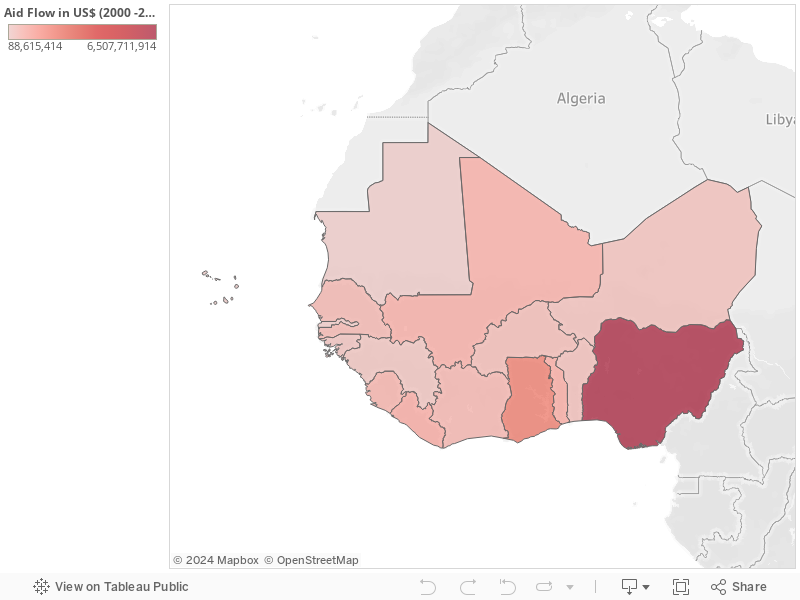
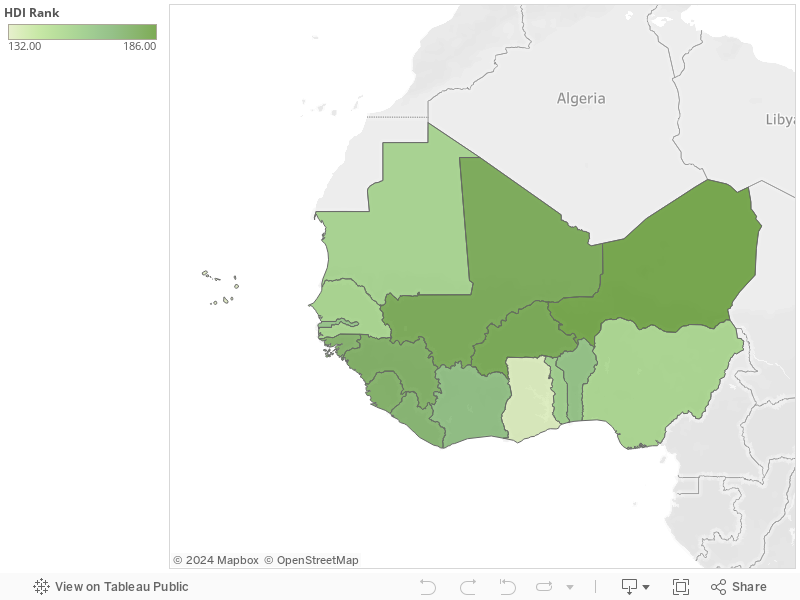
for us to affirm, it should be in the public domain. In the 16 countries in West
Africa alone, $15 trillion has been spent on aid between 2010 – 2012 with
Nigeria and Ghana receiving the most with 42% and 14% respectively (View the dataset Here). Lots of
funds you will say – but does this amount to development? Out rightly, only two
(Cape Verde and Ghana) out of these 16 countries falls within the Medium Human
Development Rank of the Human Development Index 2013, the others keep crawling
within the Low Human Development Rank since 2009 that the Index has been
published.
Consequently, every program needs the information to answer three vital questions: “what could constitute success in addressing problems?”; “How will we know success when we achieve it”? And can achievements and its processes be shared in the public domain”? Monitoring and Evaluation (M&E) systems can help everyone understand which programs are working, which are not, which can be scaled up, and which could be abandoned, but how it answers the questions in these West African countries remain farfetched!
Recently, during one of the M&E courses I
facilitated with Cloneshouse Nigeria, where 80% participants were from
government institutions, I asked “will your government be able to publish
findings in public domain, or perhaps the breakdown of total spending of your
government”? Most of them responded with enthusiasm that they are willing and
ready, but their greatest fear might be hindrances coming from the political
party, on whose platform they were elected.
 |
| Problems of the Country highlighted in Red and Solutions in Green. How True? |
Nevertheless, M&E systems can promote transparency
and accountability within governments in West Africa. Beneficial spillover
effects may also occur from shining a light on results. For aid organizations, how
much pressure is put on receiving governments is what we don’t know. One of the
participants asked “why do we always receive world bank grants for creation of
more health centers, while the once available aren't serving to optimal level,
we already have enough health centers to cater for the population of the state”
Certainly, there are organizational and political
costs, and risk associated with implementing result – based M&E systems.
There are also crucial costs and risks in not implementing such systems.
Suffice it to say that, M&E systems are not new to governments in West
Africa, with every department and project having its own M&E unit – how effective
are the unit in this region? Permit me to say “I only see their trucks and
vehicles, much more than I see their findings in the public domain.
Tuesday, March 5, 2013
SOCIAL MEDIA AND CREATIVE TECHNOLOGIES: A RECIPE TO #SAVEBAGEGA
In october 2012, when the Follow The Money Team were
developing their website, little did they know that the hashtag #SaveBagega was
going to reach a staggering 600,000 people from over 100 countries.
Consequently, putting more pressure on the government of Nigeria to attend to
the urgent need of this ailing community.
Bagega is a village community in Zamfara, Northern Nigeria, where 1,500 children awaits urgent medical attention for lead poisoning. "All we had in mind was to create a web platform integrated with social media tools, and write reports (Twitter, Facebook, YouTube and Storify) that could amplify the voice of these helpless communities" said Hamzat Lawal, co - creator of the non-profit group that advocates, tracks, and visualizes aid meant for local communities.
Everyday millions of hash tags are been created on Twitter for different reasons. "We were looking for a hash tag that could easily be related with the ailing community, and since this advocacy was directed to saving these children in Bagega, we decided to create #SaveBagega" affirmed Hamzat
 |
| Screenshot (Jan 26, 2013) of a hashtracking report on the hashtag #SaveBagega |
Bagega is a village community in Zamfara, Northern Nigeria, where 1,500 children awaits urgent medical attention for lead poisoning. "All we had in mind was to create a web platform integrated with social media tools, and write reports (Twitter, Facebook, YouTube and Storify) that could amplify the voice of these helpless communities" said Hamzat Lawal, co - creator of the non-profit group that advocates, tracks, and visualizes aid meant for local communities.
Taking a time travel to a decade ago, the story of Bagega
wouldn't have reached the next town to Zamfara. Perhaps, if the same medium was
used in 2010, when about 400 children died of thesame lead poisoning, an
epidemic that was 'termed the largest in the world" there would not have
been much death as reported.
Everyday millions of hash tags are been created on Twitter for different reasons. "We were looking for a hash tag that could easily be related with the ailing community, and since this advocacy was directed to saving these children in Bagega, we decided to create #SaveBagega" affirmed Hamzat
 |
| Screenshot (October, 2012) of the Follow the Money Website |
Coordinating Tweets could be challenging atimes, as such
tweets were directed towards stakeholders that were concerned, no thanks some
were already using twitter! the list included president Goodluck Jonathan
@goodluckjtweets, he's social media PR wasn't spared - Reno Omokri @renoomokri;
also the Senator who sees to matters of ecology and environment - @bukolasaraki
Tweets were also directed to organizations that might be interested in
children, communities, data, accountability and transparency.
Moreover, On December 6, 2012, a social media campaign was
also launched with Human Rights Watch urging people to help write on the
official facebook wall of President Goodluck Jonathan "President Jonathan,
why won't you release the money you promised in May to clean up poisonous lead
in Zamfara? Children are dying and your government's failure to act is putting
more children at risk".
What happened afterwards? By the end of January, when
Senator Bukola Saraki visited Bagega, he confirmed to the whole world, not
through the terrestrial media, but through his twitter handle @bukolasaraki
that "from confirmed sources the president has ordered the release of
funds for the remediation of Bagega. Perhaps, a win for the use of
"co-ordinated" creative technologies. Having said that, what would
have happened in cases where the government has no presence on internet or the social
media?
I have it on good authority that Mr President has approved the immediate release of funds to re-mediate Bagega.@yusufismail1 @xeenarhRecently, I was talking with some colleagues on how the internet not only make information open, but how it has become "a house of history" in 30 years from now, the children of Bagega will be opportune to read what struck their community, some years back, and what their leaders did to save them!
— Sen. Bukola Saraki (@bukolasaraki) January 25, 2013
As the quest to ensure transparency and accountability in
the funds released to Save Bagega continues, at the last stakeholders meeting
on February 12, 2013 in Gusau, the Follow the Money Team asked the Ministry of
Mines and State Development (MMSD) on going on how much was made available to
them.
How much went to Federal Ministry of Mines and Steel? They said we will get that information before next meeting to #SaveBagega."We will get back to you before the next meeting and try to make it public" says the representative of MMSD. All these were posted on their tweet handles for the world to see. On February 26, 2013, the MMSD announced in a press release that 158.3 million was received by their parastatal to encourage safer mining in Zamfara.
— Follow The Money (@4lowthemoney) February 12, 2013
As Follow the Money might not be the only available or
possible model for advocating for open data and transparency, or tracking and visualizing aid
meant for local communities, it can be said that they have been able to
document history, and open a new page in how creative technologies can be a
tool for saving communities - Maybe in this part of the world!
Tuesday, January 1, 2013
MAKING DATA OPEN FOR DEVELOPMENT: THE FREEDOM OF INFORMATION ACT IN NIGERIA
What could have kept one glued to the Television on
the 1st day of the year? Perhaps, the English Premier League, The Big Bang Theory , or Grey's Anatomy. None of them! It was Platform, showing on the “Largest television network in
Africa” – Nigeria Television Authority, popularly known as NTA on Tuesday,
January 1, 2013 at 11 – 12 pm. Interestingly, the guest was Honourable Matthew
Omegara, chairman, House on committee on Reform on Government, while the topic
– The Freedom of Information (FOI) Act kept me glued. The Freedom of Information Act, that has been on the
front burner since 12 years ago was signed into law by the President, Goodluck
Jonathan on May 28, 2011. The House of Representatives passed the Bill on
February 24, 2011, while the Senate passed it on March 16, 2011. Both House
harmonized it, and was passed by both chambers on May 26, 2011. As this act can
deliver Nigeria from the shackles of corruption and accountability, 19 months
after it has been signed into law, analysts say there is still a lot that is
missing in the Act.
The Honorable mentioned how they have started the sensitization in regions of the country with support of UKAid, CIDA and UNDP. Sometimes in December last year, I attended the Ministry of Information sensitization on the FOI Act at the Nicon Luxury. Awareness and education on the FOI Act wouldn’t stop, however stories of how organizations have started enforcing the Act should be told, lessons learnt can then be used in decision making. In all, it was a pleasure, listening to those that make our laws on TV; the truth is that at long term, enforcing the Act can help in making information public, and also tracking funds that flow from the government to communities!
As part of the Committee’s function, they are to
engage people from the public and private sectors, the non-government
organizations on how best to enforce the act to achieve the goals it was meant
for. “It is time for civil society organizations, and the public at large to
wake up and start enforcing this Act. Since the bill was passed 2011, we
haven’t seen much petitions from the public, especially the media hasn't been
up to the task” said the Honourable The FOI Act has been domesticated in Ekiti
State, while in Lagos; it has passed the second reading in the State House of
Representative.
The Honourable mentioned that the request for
information should be forwarded to MDAs (Ministry Department and Agencies) with respect to the issue at hand. Putting
things into perspective, Mr Adamu, from Kunguru village read it in the
newspaper that 20 million was allocated to the Ministry of Health a year ago to
build a primary healthcare centre in Kunguru. Meanwhile, no primary health care structure is visible at Kunguru. Mr Adamu is meant to verify the authenticity of the
news, afterwards forward a letter to the MDA responsible, which in this case,
is this Ministry of Health. Honourable Matthew further said, one should get the
information requested for in 7 days, and if otherwise, one can proceed to the court of law. Alternatively, “petitions can be forwarded to the Secretary, Committee
on Reform of Government, at the House of Representative” the Honourable member
said.
As much as analyst has taken down prospects of the
Act, the Honourable seems excited about the FOI Act, he equally stated that
states adopting the Act shouldn't be a challenge, since they all adopted the
former Official Secret Act, which has been replaced by the recent FOI Act. “By
2014, any MDA that doesn’t set up its FOI Department would not get approval for
its budget” confirmed Honourable Matthew Omegara. As much as the challenges of the FOI Act
remains conspicuous – such as information relating to national security, request for information exceeding the mandatory 7 days, and
bureaucracy in the MDAs, it shouldn’t make us lose sight of the fact that some
positives might come out of it. Some days ago, I was discussing the FOI Act with a Legal Practitioner, and he reiterated the fact that writing to any MDA alone to ask for information could put pressure on them. "Its one step in the right direction and I wouldn't want to say that all request might end up as a court case because most MDA wouldn't want to be involved in legal tussles" he said.
Several times, it has been said that, getting citizens to participate in issues that concern nation building isn't an easy task, owing to the grave loss of public confidence in the government. By the way, one may have asked, where are the CSO’s, media houses, investigative journalist that agitated for the FOI Act? They aren't sleeping, Right to Know has been monitoring the FOI Act, how it is been implemented, and perhaps sensitizing the public; The Media Rights Agenda, has also been holding workshops on the FOI Act for CSOs. What does this mean for Open Data and Open Development in Nigeria? It means Startups like BudgIT and Follow the Money could use this medium in tracking aid flows from the government to communities, at least to an extent, which could have never been achieved before.
Several times, it has been said that, getting citizens to participate in issues that concern nation building isn't an easy task, owing to the grave loss of public confidence in the government. By the way, one may have asked, where are the CSO’s, media houses, investigative journalist that agitated for the FOI Act? They aren't sleeping, Right to Know has been monitoring the FOI Act, how it is been implemented, and perhaps sensitizing the public; The Media Rights Agenda, has also been holding workshops on the FOI Act for CSOs. What does this mean for Open Data and Open Development in Nigeria? It means Startups like BudgIT and Follow the Money could use this medium in tracking aid flows from the government to communities, at least to an extent, which could have never been achieved before.
The Honorable mentioned how they have started the sensitization in regions of the country with support of UKAid, CIDA and UNDP. Sometimes in December last year, I attended the Ministry of Information sensitization on the FOI Act at the Nicon Luxury. Awareness and education on the FOI Act wouldn’t stop, however stories of how organizations have started enforcing the Act should be told, lessons learnt can then be used in decision making. In all, it was a pleasure, listening to those that make our laws on TV; the truth is that at long term, enforcing the Act can help in making information public, and also tracking funds that flow from the government to communities!
Subscribe to:
Posts (Atom)