Friday, March 7, 2014

WATER ACCESSIBILITY AND ITS QUALITY IN NIGERIA

Sitting at the second technical committee meeting on the review of Nigerian standard for drinking water quality(NSDQW) NIS 554: 2007 organized by Federal Ministry  of Water Resources in collaboration with the Standard Organization of Nigeria [SON] , the World Health Organization, UNICEF and other stakeholders in the water sector, I remembered Tunga Guru, a community in Zamfara state which had only a pond to take water from."This is our only source of water, and we have not seen anyone interested in giving us a hand pump like the other communities" exclaimed Ahmad Almakura, a Tunga Guru Community member.

As Tunga Guru isn't the only community deprived of safe water, the memories of our community outreach to Gutsura dawned on me. "As we have given up on expecting the government to errect building on the new site they said we should relocate to, we have decided to move ourselves, but I have dug three wells at the new site, but couldn't find water" lamented Muhammed Tukur. 

So far, Nigeria is way off-track in meeting its Millennium Development Goal (MDG) targets of 75% coverage for safe drinking water and 63% coverage for basic sanitation by 2015. This is even more worrisome if one considers that access to safe, clean water is a cross cutting issue which affects all other sectors such as health and education with wider impacts on the economy.
In Nigeria, approximately 66 million Nigerians still do not have access to safe water (i.e. 44% of the population). Only 47% in rural areas do have access while 75% in urban centers do have access. Performance on sanitation is even worse. The sanitation coverage stands at 31% representing a reversal from 37% coverage in 1990.

As poor coordination of the activities of the various agencies working in the WASH sector also has proved to be a big setback in the delivery of effective services in the sector. This is because inadequate clarity on the roles and responsibilities of the different actors in the sector makes it difficult to maintain coherence and avoid duplication of efforts and resources, which is crucial for effective and efficient use of the limited resources available and for increased productivity. the committee meeting, was mostly dedicated to getting MDAs to know their exact roles in terms of WASH activities in the country, and modeling. It was agreed that to avoid contamination a minimum of 10m and maximum of 30m should be the distance between water sources and septic tanks. All parameters and maximum permitted limits for drinking water quality remain the same.

The most interesting part of the document was on data management which is on 6.4 on the living document. It stated that Water quality result shall be accessible to the general public; in essence water quality should be made open. But how open and available is water points and their quality in Nigeria? Having knowledge of water points and its quality will allow policy makers to donor agencies to make better decisions especially on where or what community needs water. A good place to start is the new databank of the country's MDG Office


With the Federal Ministry of Water Resources data bank  still pending and "closed" it will be pertinent for stakeholders to keep advocating for its implementation. "I believe we have all seen and made adequate comments on the document so that this meeting will serve as a means to harmonize these comments in order to finalize the process and come up with a standard document that is enforceable with all stakeholders owing it and performing their responsibilities effectively" said Mr S. O. Ome, the Director Water quality control and sanitation.

Friday, February 7, 2014

KETA VILLAGE, BURIED IN THE GORONYO DAM BY FLOODING

“Our town is chiefly known for the production of dry crops such as Guinea Corn, Onion, Rice, tomatoe and pepper, and I will like to add that we can produce as much rice that can feed the whole Nigeria” said Alhaji Mohammed Sambo Usman [Sarkin Gabas of Goronyo] as he welcomed us to his palace after a 100 km hitchhike from the Sokoto Metropolis on January 22, 2014.


Alhaji Mohammed affirmed that some villages within the town have been witnessing several flooding in the past years, always caused by the rise in water level of the Goronyo Dam. Villages that are mostly affected include Keta Village and Taloka Village, all about 20km from the Goronyo town where the palace is situated. Unlike Gutsura in Zamfara state, Taloka has been permanently and completely relocated to a new government – built facility for communities displaced by floods.
Mobile Geo-tagging of flood plains within Keta Village
Consequently, the team decided to work at Keta Village, situated just behind the Goronyo Dam. We sited a new health centre, as we proceeded to the village head compound. Alhaji Garbi Jingi explained how they have been coping with incessant flooding for 5 years. “We need the urgent construction of an elaborate embankment that will protect the village from loss of their crops and farming activities to flooding.
Conducting a group discussion with key community members
The #WalktoMali team engaged the community members in a participatory mapping, while sharing ideas and local communication that can ensue before, during and after emergencies such as flooding. The only primary school within Keta was established in 1979, with the old block of one classroom dilapidated, a new block of 3 classrooms has been constructed.
During the participatory mapping
“We always lose millions of our farming produce to flooding during the last 3 years, and 3 people have lost their lives (2 women and a child) in the various disasters. As  Keta village remains vulnerable to another flood, it is pertinent for concerned organizations to help strengthen this community by building a 5km long embankment, to prevent future disaster.

Monday, January 20, 2014

GUTSURA, THE FORGOTTEN FLOODED COMMUNITY BY THE ZAMFARA RIVER

Millions of crops and hundreds of hectares of land, as been lost to flooding in Gummi Local Government area of Zamfara State. Consequently, the #Walkt oMali team chose the LGA as its first stop. The journey from Gusau, the capital of Zamfara to Gummi is about 300km. We had to sleep at Anka, while on Monday January 20 we proceeded to Gummi. To our surprise, it took us one hour to get a car to hitchhike on!
Gummi looks more developed than Anka, we visited the plalace of the Emir, and the team was welcomed by the Gummi senior district head, Lawali Banjiye( Bunun) . We had a one hour of focus group discussion at the palace about environmental and peace building issues within the community after which, we confirmed our community of interest was Gutsura.


Located about 60km from Gummi town, Gutsura is situated by the Zamfara River, which took its source from the River Niger.  The village has no source of power and health center, but has an MTN mobile network coverage, with just one well as their source of water. “Our community has been experiencing flooding for the past 10 years” explained Alhaji Umaru Nasarawa, the village head. Gutsura has about 570 households and 3,000 residents. Alhaji Umar also explained how swift they were able to have access to relief materials during the 2013 flood. Nevertheless, he reiterated that government has not helped in relocation [construction of permanent buildings, providing water, and electricity] of Gutsura to the new site allocated to them at New Gutsura
The team with Tukur at the New Gutsura Site

The #WalktoMali team engaged the youths of the community to a participatory mapping exercise while also documenting their local knowledge – the community itself has developed building a local embankment to reduce the impact of the flood. While this might not be enough, much will be needed to help build a solid, more concrete and longer embankment. Muhammad Tukur, the community spokesperson emphasized on how the village needs an urgent attention.


We have made up our mind to start moving to New Gutsura since the government has not started erecting shelter, but our greatest challenge is getting water from the site. I have personally dug three wells at the site, but couldn’t get water from one!” lamented Tukur.


As the rains will soon be here again, this village will be left with building more resilience to prevent flooding, except the government, international aid agencies, private companies build houses and important social amenities for this ailing community, or help them build a stronger embankment to prevent the next flooding, that is always experience due to the rise in water level from the Mashayar Dantudu River.

Monday, December 2, 2013

THE FUTURE OF DISASTER RISK RESPONSE IN THE WAKE OF THE DIGITAL HUMANITARIAN SPACE

Today, not only can you donate cash to support those affected by disasters, you can also donate a few minutes of your time to support the relief efforts on the ground thanks to new humanitarian technologies and platforms orchestrated by a network which brings together a diverse set of individuals from the humanitarian, development, human rights, policy, technology, and academic communities.

This network catalyzes communication and collaboration between a wide range of different communities with the purpose of advancing the study and application of crisis mapping worldwide. Popularly known as the International Conference of Crisis Mappers [ICCM], it once again brought hundreds of humanitarians together at the United Nations Office in Nairobi [UNON] on November 18 – 22, 2013 discussing and plotting ideas for the future of humanitarian response in a conference tagged “Humanitarian Technologies – In and Out of Africa”.

The Crisis Mappers network was launched in October 2009 at the first International Conference on Crisis Mapping (ICCM 2009) in Cleveland, Ohio. These annual conferences facilitate collective engagement and dialogue that helps construct the boundaries of this emergent new discipline. At the conference, participants also brainstorm how to solve real problems and initiate projects that help advance this new field.

Throughout the year, the network facilitates continuing virtual interaction among its members.Participants engage through webcasts, create and browse profiles, email their needs through the dedicated mailing list, write blogs, and share other announcements with the group. “We in the CrisisMappers community have the luxury of having learned a lot about digital humanitarian response since the Haiti Earthquake; we have learned important lessons about data privacy and protection, codes of conduct, the critical information needs of humanitarian organizations and disaster-affected populations, standardizing operating procedures, and so on” said Patrick Meier, the co-founder of the Network, in his keynote welcome address.

This year, the ICCM started with a preconference site visit to SiSi ni Amani and Spatial Collective, which allowed participants to observe first-hand how GIS, mobile technology and communication projects operate in informal settlements, covering a wide range of topics that include governance, civic education and peace building. As learning as become part of the ICCM, the second day was observed at the iHub, where different kinds of training were observed throughout the day. Facilitators from ESRI, Open Street Maps, MapBox, CaerusGeo, Ushahidi took participants through creating maps using the different platforms, and likewise lessons learnt from various initiatives that have been used on the platform. The short messaging service [SMS] and mobile security training stream was anchored by Frontline SMS and Tactical Technology Collective, showing how humanitarians have been deploying the platform to create social change and the security implications. The team from Open Knowledge Foundation [OKF] was able to curate their school of data training with some participants, while the knowledge stream was lead by Internews.
Angela Oduor leading the Mapping Stream session at the iHub 
On November 20, 2013 the main conference started at the UNON, Gigiri with the traditional ICCM Ignite talks showcasing great digital humanitarian works, forward – thinking concept and ideas, with recent research and findings within the network. This was followed by a panel that led the discussion mixed with a reflection on the Westgate Mall attack in September in Nairobi. Philip Ogola of the Red Cross in Kenya confirmed that the social media played a big role in getting situation awareness during crisis; Angela Oduor of Ushahidi, a non government technology outfit in Kenya showcased how the ushahidi platform was used in reaching out to a number of families during the siege. As technology is becoming the future to response, IBM’s Charity Wayua discussed how technology will continue to be deployed in response to siege such as that of the Westgate. At the end of the discussion, it was noted that technology played a big role in creating situation awareness during the Westgate attack, nevertheless co-ordination using this technology still remains a challenge, which in the near future will be tackled.
ICCM 2013 participants at the UNON conference room
As part of the day’s event, the tech fair became a side attraction at the conference room lounge. The fair brought together technology tools and events that have or will shape humanitarian response. Presentations at the fair included the Artificial Intelligence for Disaster Response by the Qatar Computing Research Institute; NGO Aid Map by Interaction; location-based web and mobile software by Azavea; The Walk to Mali project by Earth Hour Nigeria; Mobile data collection in Somalia by mFieldwork; Security issues for everyday digital by Tactical Technology Collective and ESRI showcasing its various GIS platforms. The day went into a closing session with UNOCHA’s Information Management officer – Andrej Verity giving the keynote of the conference, live via Skype from the Philippines. He highlighted the importance of the work of digital humanitarians in helping first responders on the ground, especially since the beginning of the devastating 300km/hr typhoon Yolanda that struck the Philippines. “We have witnessed a paradigm in the way humanitarians all around the world now respond to crisis and disasters since 2009 till this present moment, just this morning, the head of OCHA –Valerie Amos, has been presented verified situation updates of the Philippines, this data, gathered by the various digital humanitarians over the past few weeks will help hasten how our responders on the ground respond to needs of the people in the Philippines” said Andrej

The following day witnessed roundtable sessions about Big data with Anahi Ayala of Internews reiterating that Big data or data becomes useless if the people cannot make use of it, Emmanuel Letouze of the University of California affirmed that Big data has no half life, and remain available while Jon Gosier advised that leveraging on Big data is important especially if an organization can define what is willing to do with it. Another session discussed CrisisMapping for Conflict Management with Sisi ni Amani’s Rachael Brown sharing how they have combined mobile technologies with community engagement in creating conflict situation awareness in Kenya, while Peter Nwamachi from the Kenya’s government steering committee on peace building and conflict management corroborated the importance of collaborating with Sisi ni Amani to respond and build peace among communities. Helena Puig shared lessons learnt from using crisismapping for peace building in several developing countries. Analyzing information from Hard-to-Access areas, the third and last session for the day saw Christophe Billen of the People’s Intelligence challenging the crisismapping community to be cautious of information that is been put up in the public domain, while Nat Walker of the Liberia Early Warning group mentioned the importance of testing different tools and community engagement in providing early warnings to government institutions in Liberia.

The last day of the conference were dedicated to self organized sessions by USAID, Google, Openstreetmap, Humanitarian Innovation Fund; United State, State Department; OKF; ICT for Justice. It witnessed an amalgamation of ideas in improving workflows for different organization, mapping party for the Philippines and Central African Republic, and the importance of Open data, Big data in Crisis mapping.

Participants at the Digital Humanitarian Summit
ICCM over the years have witnessed the emergence of the Digital Humanitarian Network [DHN] which is a network that coordinates different organization that help responds to disasters, and also connect their output in meeting the needs of the traditional first responders, humanitarian organizations on the ground. The DHN had its 2 day summit at the 88mph on Ngong Road, also in Nairobi. Organizations present at the summit included Geeks Without Bounds, GISCorps, Stand By Task Force [SBTF], UNOCHA, Google, Humanitarian Openstreetmap (HOTOSM), Connected Development [CODE], Red Cross Kenya, Crisis Cleanup, Save the Children Kenya and a list of others. The summit allows for a reflection on the activation and workflow of all the DHN and also external admissions into the network. The summit ended with the clear roles for specific workflow for different member organization, the start of local physical meet ups, new volunteer engagement workflows and new mechanisms in admitting prospective members.


In developed and developing countries, people are connecting through technology at an accelerating pace, with technologies that have more computing power than NASA used to send a man to the moon. Leveraging on these technologies, this new space called “CrisisMappers” continue to evolve and increasingly informing the world, thus making connected self reliant communities to affect the delivery of humanitarian aid. Overtime, this space present a fundamental shift in how we can respond to disaster risk management programs and intervene in disaster situations especially in Nigeria, and the West African region that has experienced more disasters in recent times. Traditional disaster management organizations have started embracing these changes and are reorienting their approaches around the essential objective of helping people to help themselves – Our disaster management organizations too should take a cue from this community as it holds great promise for the future, even as the space recognizes its pitfalls and the fact that progress has not always been smooth – a challenge that will be figured out during the ICCM 2014 in the New York City!  

Tuesday, October 8, 2013

HOPE FOR ARTISANAL SMALL SCALE MINERS IN ZAMFARA?

Artisanal and Small-scale Mining (ASM), is carried out by an estimated number of 15 million miners, provides an approximate 100 million people with a living, and accounts for about 15% of the worldwide primary gold production. About half of the world’s estimated 30 million ASM miners are dedicated to gold extraction.

The number of people involved in ASM in general has risen dramatically during the last years, with Nigeria contributing between 50,000 to 150,000 man power to this sector, and ASM is often referred to as a new “phenomenon” and alleged “problem”. ASM is however as old as human civilization and only recently, during the first half of the past century, the technological divide between large and small scale mining occurred. Global awareness about the importance and extension of this sector is rising and focusing on social and environmental responsibility.
Artisanal Small Scale Miners at Sunke Zamfara Nigeria

 In Zamfara, ASM is a spontaneous self-organizing social system while industrial mining is planned and centrally coordinated. Artisanal miners engage in mining to earn a living, while industrial mining is driven by corporate economic considerations. Miners focus on industrially not economic small high-grade mineral deposits in ‘open access’ condition, and employ a ‘common pool resources’ management approach. Truth be told, ASM is an important source of local income and often drives local development. Low technologic levels, at the budget of rural communities, have however had serious consequences on health, safety and environment in Zamfara. A griming example is the lead poisoning epidemic that caused the death of 400 children in seven artisanal gold mining communities in Zamfara during the hazy weather of 2010.
 
Conducting a preliminary Baseline Study of ASMs in Zamfara
In Zamfara, the contamination of compounds with high lead tailings is quite alarming, and calls for urgent attention. In countries such as Peru, Bolivia and Ecuador, they have succeeded in stopping the use of mercury, a more potent and deadly heavy metal than lead. The widespread use of mercury is a matter of global concern, while Zamfara still struggles with lead extermination, how to encourage Artisanal miners to stop the use of mercury still remains a big task. Global mercury emissions from gold ASM are currently estimated in the range of 1000 tons per year, with Nigeria contributing about 10 to 25 tons. Only half a decade ago, in 2005, estimations were still in the range of 320 tons or 17 per cent of anthropogenic mercury emissions. Under current conditions, it is reasonable to expect this trend to continue in the coming years.


Legal frameworks (or their absence) and economic interests of power groups force ASM in many countries into the informal sector. Given a certain complexity of the issues related with ASM, a common approach of the past was to ignore and marginalize artisanal miners. This made problems and especially resource conflicts, e.g. between communities and industrial mining only worse. National and even networked efforts remained isolated. Only recently, the need to engage in formalization processes in a multi-stakeholder context of Governments, Industry, Civil Society, ASM, Consumers, and Development Agencies is slowly becoming a common consensus.

On October 29, 2013, about 60 participants, at a stakeholders meeting organized by Global Rights [a human rights based non-profit] and Follow The Money [A Connected Development transparency and accountability non-profit network], sat in the conference room of the Fulbe Villa in Gusau, Zamfara, in Northern Nigeria to deliberate on how artisanal miners can leave out of poverty, sustainably without tampering with the natural ecosystem. One of the salient issues was the process of formalization of ASMs, and the capacity of the state ministry of health to carry out emergency response to lead poisoning cases that has become rampant in the communities. In Nigeria, ASM are recognized immediately they have been issued certificated to carry out such mining practices, and it is been supported by the National Minerals and Metal Policy, and the Nigeria Minerals and Mining Act, both actualized in 2007.
Cross section of participants at the Stakeholders meeting in Fulbe Villa, Gusau, Zamfara
At the meeting, it was affirmed that the Ministry of Mines and Steel Development [MMSD] has commenced with the process of formalizing artisanal miner, with about 45 registered ASM cooperatives. For the past 20 years, “the individual Gold panner is a myth” as ASMs must be organized into small work groups or larger clusters of workgroups. With lessons learnt from other part of the world, government can never be in a position to efficiently enforce compliance of thousands of individual miners. In Peru, ASM were already formed as clusters of workgroups, while in Mongolia they formed partnerships. Nevertheless, legalization alone makes environmental compliance not enforceable, government must introduce locally, workable, and adaptable technologies, which must be tested locally. In Mongolia, when the use of mercury was banned in 2008, the government introduced a viable technology solution for a mercury and cyanide free processing plant.

In the same light, the MMSD has taken a bold step in the purchase of 3 Egoli machines and 9 wet milling machines. However, one may ask if that will be enough for the growing population of ASM in Zamfara. More often than not, the response of governments is to ignore ASM, but legalization of ASM needs however to be seen as a first step that is part of a larger strategy for ASM formalization integrating social, environmental, labour, health and safety, economic, commercial, gender, organizational and technical dimensions. The implementation of most technical environmental improvements requires a balanced combination of their demonstrated feasibility, capacity building in miners as well as in support organizations and supervision agencies, and realistic enforceable requirements for which the technology provides a solution. Within a formalization process, this creates intentional artificial win-win options.

Environmental and health management of ASM needs to be seen in a wider context of responsible mining. Lead poisoning and contamination is highly prevalent in Zamfara, while acute mercury poisoning is very rare, opposite to chronic poisoning which accumulates often over years. For miners, the toxic effects of mercury are not as obvious as for scientists. Concerns of workplace safety, the risks of accidents, and the often lacking health services in mining communities in combination with generally harsh and unhealthy living conditions in remote places are perceived a much higher priority. For the umpteenth time, the stakeholders have called on the state ministry of health to rise up to its responsibilities. “Many times we have called on the state ministry of health to join in complementing the work of humanitarian organizations working in treating lead poisoned children, but no response” said Ahmad Ashim These concerns have to be taken serious, as they directly affect the quality of life of the miners and their families, and because without addressing them, projects not only lose credibility in the eyes of the miners but fail to contribute to responsible ASM and sustainable development.

Responsible ASM cannot be done in an unorganized way. ASM can only be organized if ASM organizations are in place. ASM organizations need to be empowered to be able to organize the extractive activity. ASM is a (self-) employment generating activity in remote areas, whereby the location is determined by the mineral deposit. Miners and their families create their communities and livelihoods and aspire development, still in the same way as miners did 150 years ago by creating the gold rush settlement of Sacramento and converting it into the Capital of the US State of California. In the already existing and regulated societies of today, a broader formalization approach must support and accompany the miners in this process. An ASM formalization process therefore must not be limited to the pure legal aspects, but incorporate community development and broad capacity building. This creates the capacity to comply with social and environmental requirements and makes requirements enforceable. ASM communities require equal rights and a similar level of attendance by the public sector as other communities; most “problems of ASM” are home-made and are created by denying miners these rights, and marginalizing them.


Monday, May 20, 2013

DANGLING THE CARROT: THE EMERGENCE OF MORE FRAGILE STATES IN WEST AFRICA

Just this morning, hundreds of people have started fleeing the northern Nigeria state of Borno to neighbouring Niger, Chad and Mali. Apparently, the government of Nigeria just announced a state of emergencyin 3 states - Yobe, Adamawa and Borno, where the popular terrorist group – Boko Haram resides. Niger, Chad and Mali seem to be a big suspect. How? – Niger has a awful 81.8% of her population in severe poverty; Northern Mali is still struggling with war, and also has 68.4% of her population in poverty; the story of the later – Chad has been disturbing in recent times, with the shrinking of her only resource – the lake, perhaps due to climate change.

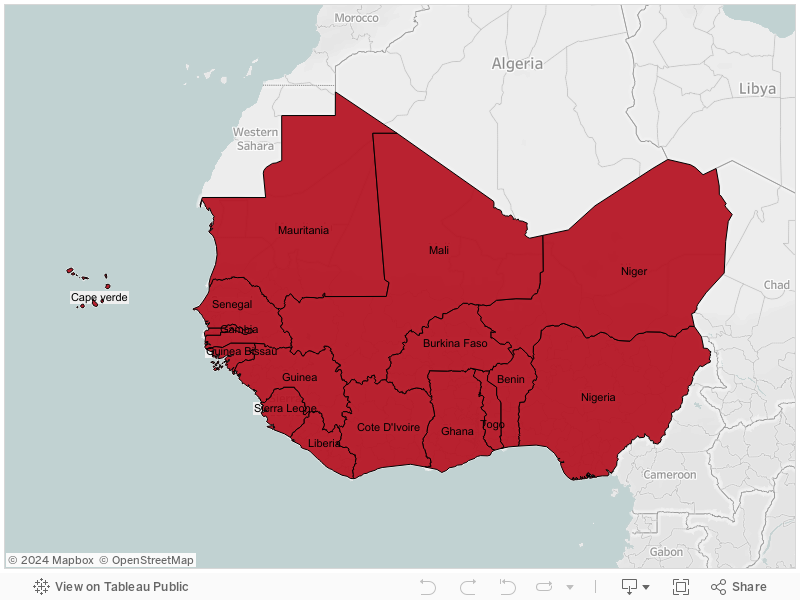
These are all fragile states, which are also a reflective of low income countries. The average gross national income per capital of the 16 West African states is at $908.75. That’s quite disturbing! The highest in this region is Cape Verde with about $3,540. Singapore and Malaysia both have $42,930 and $8,770 respectively. ( Scroll over map below to view indicators of fragility in West African countries) 


Nigeria, where 52% of the about 312 million people living in West Africa reside was ranked 14 out of 117 countries on the 2012Fund for Peace failed states index. Her demise remains peculiar owing to its size and population. While her GDP has become one of the fastest growing in the Sub Saharan, it is been threatened by insecurity. The Boko Haram sect based in northern Nigeria has killed about 1,854 people in 2 years

More than ever, the time bomb seems dangling on the giant that looks over the West African state. The challenges of insecurity, lack of social services, job creation and accountability in government cannot be over emphasized. In Nigeria and other West African countries, about 48.3% still live in poverty. Paul Collier, a professor of economics at Oxford University referred to them as the “Bottom Billion” in 2008 and proffered some solutions. It’s quite unfortunate that the same challenges still exist, with the same set of people at the leadership.
(View Paul Collier TEDx Talk below) 


One may have taught, as the post – 2015 deliberations set in, wouldn't it be pertinent to add good governance to one of the sustainable development goals? If government cannot provide basic services (roads, good education, health centres  to her citizens, fragile states resorts, thus demining the prospect for development. However, the way out of these environments is a very limited, much focused package because the capacity for change in these societies is very limited.

Often the government is not able to do very much, and people have no self belief in their society. Where will the solutions come from? It should come from the indigenes, perhaps with little support from external stakeholders.

Monday, April 22, 2013

MONITORING AND EVALUATION SYSTEMS: CAN THEY PROMOTE TRANSPARENCY AND ACCOUNTABILITY IN WEST AFRICA?


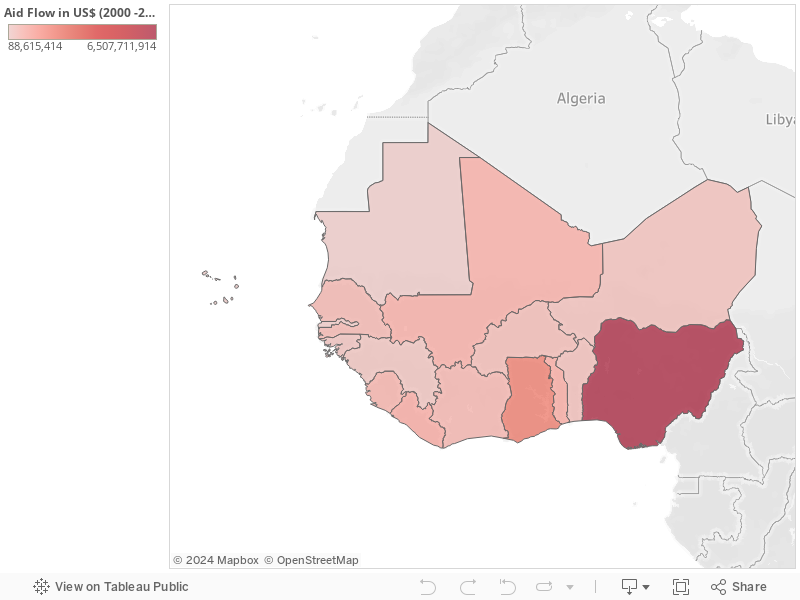
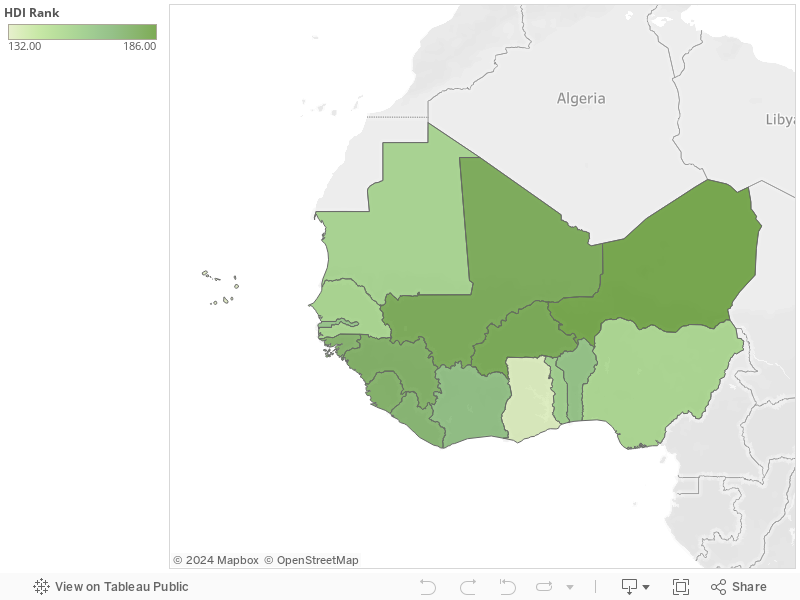
Development programs are expected to deliver results for everyone involved in development. The value of their ideas, advice and action produced is increasingly being gauged by whether it improves lives and for us to affirm, it should be in the public domain. In the 16 countries in West Africa alone, $15 trillion has been spent on aid between 2010 – 2012 with Nigeria and Ghana receiving the most with 42% and 14% respectively (View the dataset Here). Lots of funds you will say – but does this amount to development? Out rightly, only two (Cape Verde and Ghana) out of these 16 countries falls within the Medium Human Development Rank of the Human Development Index 2013, the others keep crawling within the Low Human Development Rank since 2009 that the Index has been published.


Consequently, every program needs the information to answer three vital questions: “what could constitute success in addressing problems?”; “How will we know success when we achieve it”? And can achievements and its processes be shared in the public domain”? Monitoring and Evaluation (M&E) systems can help everyone understand which programs are working, which are not, which can be scaled up, and which could be abandoned, but how it answers the questions in these West African countries remain farfetched!

Recently, during one of the M&E courses I facilitated with Cloneshouse Nigeria, where 80% participants were from government institutions, I asked “will your government be able to publish findings in public domain, or perhaps the breakdown of total spending of your government”? Most of them responded with enthusiasm that they are willing and ready, but their greatest fear might be hindrances coming from the political party, on whose platform they were elected.
Problems of the Country highlighted in Red and Solutions in Green. How True?


Nevertheless, M&E systems can promote transparency and accountability within governments in West Africa. Beneficial spillover effects may also occur from shining a light on results. For aid organizations, how much pressure is put on receiving governments is what we don’t know. One of the participants asked “why do we always receive world bank grants for creation of more health centers, while the once available aren't serving to optimal level, we already have enough health centers to cater for the population of the state”


No doubt, external and internal stakeholders should have a clear sense of status of projects, programs and policies. But, is the ability to demonstrate positive results able to increase popular and political support in West Africa? The truth is that most citizens do not have public confidence in the leadership of their various states. Even, if they publish positive results, citizens believe the outcomes are been doctored to portray “a breath of fresh air” which evaporates at dawn.

Certainly, there are organizational and political costs, and risk associated with implementing result – based M&E systems. There are also crucial costs and risks in not implementing such systems. Suffice it to say that, M&E systems are not new to governments in West Africa, with every department and project having its own M&E unit – how effective are the unit in this region? Permit me to say “I only see their trucks and vehicles, much more than I see their findings in the public domain.